
"THE ART OF FILM SCORING” - a conversation with CSA nominated composer Tom Third:
As a lead up to the 2026 Canadian Screen Awards, Core is shining the spotlight on some of our nominated composers with a series we call, "THE ART OF FILM SCORING”, where we interview, probe and prompt composers to talk about their process.
Martin Mull once said, “Talking about music is like dancing about architecture”. So hard is it to talk about music in words, and yet composer and filmmaker must use their words to find the inner essence of the story in music. In the coming weeks, we’ll be talking about talking about music - this week, with composer TOM THIRD about his CSA nominated scores for THE SPOILS and MODERN WHORE.
A. Hi Tom, congrats on your 2 nominations for Best Original Music in a Feature Length Documentary. I guess you’re up against yourself again, but this isn’t your first dance at the Canadian Screen Awards is it?”
T: This is my 8th and 9th time to bat at the CSA's, and I have 2 wins; not counting the Gemini’s from another era, and the 5 Canadian Screen Music Awards nominations, which are awards given out to composers by composers. But who’s counting?
A. You’ve had more than your fair share of accolades. What’s in your secret sauce Tom?
T: I don’t know if I’d call it a huge secret. I just believe that every composer really has to get to the heart of every script (or subject for documentaries) before they start each new score.
A: How exactly do you get to the heart of each film?
T: I mean that there is a central theme to each narrative, fiction or fact, and often a very personal reason the director has taken on the material in the first place. I try to think of ways to help communicate the passion that comes from the writers and directors, and convey that energy to the audience. So in essence, I think a lot about what’s on screen, but also the complex motivations behind its creation. In short, the directors and I dance about architecture!
A: What is at the heart of THE SPOILS and MODERN WHORE
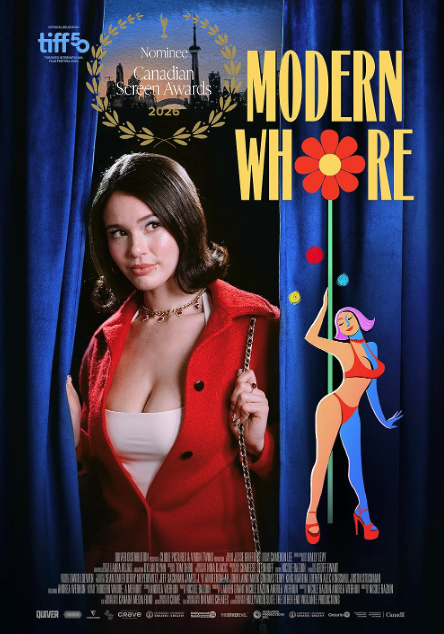
T: MODERN WHORE, is a documentary about sex work based on the memoir by Andrea Werhun who also stars. Sometimes it’s very funny, but other times gravely serious. Director Nicole Bazuin and I had a blast comic up with all kinds of comic approaches to the score, but I also spent a lot of time thinking about the more serious undertones to the story, and tried to use the music to highlight some of those themes in particular. At its core, MODERN WHORE is a story of empowerment and I tried to never lose sight of that, no matter how funny we were trying to be! THE SPOILS was an entirely different kettle of fish. It has its absurdist comedic moments too, but at its heart, a story of the Nazi plunder of artworks during the Second World War, and the battle to repatriate these masterpieces to their original owners. It’s part detective story, part courtroom drama and art history lesson. With such serious subject matter, director Jamie Kastner and I took great pains to avoid the cliches of World War II documentaries where we could, but still never shy away from the horrors of that regime.
A: Can you give me an example of what THE SPOILS sounds like?
T: https://s.disco.ac/onizfaormvaz
A: How about for MODERN WHORE? Would you say that there was a central “theme"? Or would you call it more of a central “vibe”?
T: The vibe of MODERN WHORE is really a madcap playlist of Nicole’s and my favourite film music, from spaghetti westerns, to disco classics, to Switched on Bach. We covered the gamut and then some!
https://s.disco.ac/mgepdmlspyxs
A: I’m guessing you have to attenuate your approach for every subject and for each director. How different was it to work with Jamie Kastner and Nicole Bazuin. How would you describe each director’s language when it comes to spotting or evaluating your score for their films?
T: I’m been so consistently lucky to work with great directors I’d describe as professional visionaries. Both Jamie and Nicole are incredibly creative, open minded, and encouraged me to experiment all along the way. With both these teams, we really just hunker down scene by scene and turns the screws as much as we can. Lots of laughs, but lots of notes and revisions until we think we’ve got it perfect.
A: I’ve heard some filmmakers describe music as “Icing on the cake”, but it’s really more than that.
T: Yah, it’s a lot more than that, it’s asking, “why are you baking this cake?”, and "what is the core ingredient that makes the cake what it is?” I think that every good filmmaker should be prepared to have that conversation with their editor, their music composer, their sound editor.
A: Thanks Tom, it has been illuminating. Good luck at the CSA’s.
T: Thanks, fingers are crossed. I’m just happy to be in good company.